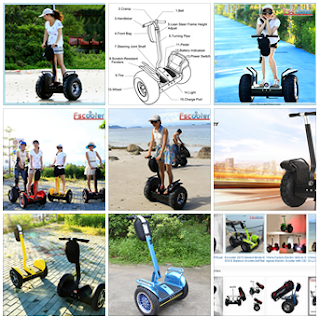
This article provides information about mobility scooters, and the health benefits they can provide. By getting an electric scooter, you can open many doors that have been previously closed, perhaps because of a disability or illness - such as going shopping, going out for the day, going for a "walk" with the children or grandchildren. Anyone who struggles to walk or gets tired after walking a short distance could benefit from using a mobility scooter. Using an electric scooter is not an admission of defeat and can make a great deal of difference to your quality of life, and can even provide a new lease of life and a new found independence.
If you are thinking about getting a mobility scooter, it is probably past time to do it. However, the sooner you start using an electric scooter, the longer you might retain the ability to walk.
A disabled scooter can give you more energy because you won't be using all your energy in trying to walk, or push a traditional wheelchair. Using an electric scooter will help to relieve the strain on shoulder muscles and wrist and elbow joints that are used when pushing yourself in a self propelled wheelchair or someone else in a traditional transit wheelchair. An electric scooter can help to provide you with the freedom to go where ever you want, whenever you want. Some models are capable of travelling up to 35 miles between charges, so the distance you can cover is much greater than in a traditional wheelchair.
A large number of supermarkets and DIY stores as well as other shops offer customers the use of a mobility scooter whilst shopping. If you are not sure if you would benefit from one, why not try one and see if it makes shopping any easier. Some places such as large shopping centres or town centres offer Shopmobility, which is a scheme that lends or hires mobility equipment based on the user's requirements, and then provides brief training on using the equipment. If you go on holiday why not arrange to hire a mobility scooter instead of taking your wheelchair, and see if it makes a difference.
By getting an electric scooter, you can open many doors that have been previously closed, perhaps because of a disability or illness - such as going shopping, going out for the day, going for a "walk" with the children or grandchildren. You can go up and down steep hills in comfort and without fear of rolling down the hill, and without being worn out for days afterwards. You can visit friends and relatives at your convenience, without needing to rely on public transport. Most mobility scooters have a key to start them, and so if the key is removed the scooter cannot be driven. This means that the scooter can be left outside a shop, for example, and it can be "locked" like a car.
If you think that you, a friend or relative could benefit from a mobility scooter or a powerchair, why not try some and find one that you like. If you know somebody with a mobility scooter, ask them about it, and what improvements it has brought them. Mobility scooters can mean the difference between managing to live at home independently, and having to rely on others.
2015年8月23日 星期日
2015年8月11日 星期二
Practical guide on how to verify chinese company
Thanks to ecommerce, companies in US are able to sell products/service to China, a country you have not yet visited, you don't speak the language, you are not aware if the legal systems are similar, you don't know and don't have the resource to know if the counterpart Chinese companies are real.
So we face a question: How can I check Chinese company? How to check the legitimacy of your Chinese buyers/partners? Are they a real company.
Some facts:
China don't have a organization like BBB(Better Business Bureau) in US, where you could check the legitimacy and background of a Chinese company.
Chinese administration of industry and commerce is the governing body that in charge of company registration. However, they don't have a nationwide website or database system that open to public to inquiry the authentication of Chinese companies.
Sourcing China blog recently published an excellent article, sharing how to make china company verification without visiting their premise. Here are some tips on their blog:
1) Do they have company bank account
Only legally incorporated companies can have business bank account. If the Chinese company insist you to pay their personal account only, be cautious.
2) Visit local AIC websites
Even though the national AIC don't have a nationwide system allow you to check the legitimacy of Chinese company. However, some(not a lot) local AIC do allow you to use their websites to check the legitimacy of Chinese company.
3) Websites and Email
If they don't have websites, use public email account like 163, sohu, sina, it is negative.
4) Hongkong offshore company
Be cautions doing business with Hongkong company, but operates only in mainland China. They are shell company. Read this article to learn the risk.
China Checkup offers a wide range of convenient and affordable company verification and certificate verification services that greatly simplifies the process of verifying a Chinese company.Do you have other tips for verifying a Chinese company's legitimacy?
So we face a question: How can I check Chinese company? How to check the legitimacy of your Chinese buyers/partners? Are they a real company.
Some facts:
China don't have a organization like BBB(Better Business Bureau) in US, where you could check the legitimacy and background of a Chinese company.
Chinese administration of industry and commerce is the governing body that in charge of company registration. However, they don't have a nationwide website or database system that open to public to inquiry the authentication of Chinese companies.
Sourcing China blog recently published an excellent article, sharing how to make china company verification without visiting their premise. Here are some tips on their blog:
1) Do they have company bank account
Only legally incorporated companies can have business bank account. If the Chinese company insist you to pay their personal account only, be cautious.
2) Visit local AIC websites
Even though the national AIC don't have a nationwide system allow you to check the legitimacy of Chinese company. However, some(not a lot) local AIC do allow you to use their websites to check the legitimacy of Chinese company.
3) Websites and Email
If they don't have websites, use public email account like 163, sohu, sina, it is negative.
4) Hongkong offshore company
Be cautions doing business with Hongkong company, but operates only in mainland China. They are shell company. Read this article to learn the risk.
China Checkup offers a wide range of convenient and affordable company verification and certificate verification services that greatly simplifies the process of verifying a Chinese company.Do you have other tips for verifying a Chinese company's legitimacy?
2015年7月30日 星期四
Switched on yet?
Are you starting to get scared every time you visit the fuel station? If so maybe now is the time to start thinking about swapping your gas guzzler for an eco friendly and cheap to run electric vehicle.
Electric scooters have come on in leaps and bounds over the last five years and although they’re still comparatively expensive to buy they can still work out as a cost effective long term solution.
The Plug In Sprint is one of the latest electric scooters to arrive in the UK, it’s built in China and is imported by Emissions Free Solutions. It costs £3,800 which is quite a lot compared to the price of a similar spec Chinese built 125cc petrol scooter which could be had for less than £1,800. With electric you’re paying a premium for the expensive batteries, motor and electronics.
It is a lot of money but when you think about the long term running costs compared to a petrol scooter/car or public transport that extra cost can soon be clawed back. A full charge on your Plug In will cost around 57 pence and you get a range of over 40 miles on average and road tax is free, so within three years you’ll recoup the extra outlay.
The main downside with an electric vehicle is the range; Plug In claim the Sprint can cover as much as 67 miles at 25mph, or 35 miles at 63mph, more than enough for most commuters. It takes four hours to fully charge and it uses a conventional three pin plug which is attached to a three metre long lead under the seat, so depending on where you work you could charge it whilst you’re there.
Before riding the Plug In you’ll need to take a one day CBT test and have insurance, just like you would for a petrol scooter. Everything else is just like riding a convention machine. You turn the ignition key, take it off the stand, press the starter button, twist the throttle and you’re away. I was impressed at how smooth the scooter felt and at how well it accelerated. The first thing you notice is how silent the world around you seems, the only sound is the road noise from the tyres and the wind.
Are you starting to get scared every time you visit the fuel station? If so maybe now is the time to start thinking about swapping your gas guzzler for an eco friendly and cheap to run electric vehicle.
Electric scooters have come on in leaps and bounds over the last five years and although they’re still comparatively expensive to buy they can still work out as a cost effective long term solution.
The Plug In Sprint is one of the latest 72v electric scooter to arrive in the UK, it’s built in China and is imported by Emissions Free Solutions. It costs £3,800 which is quite a lot compared to the price of a similar spec Chinese built 125cc petrol scooter which could be had for less than £1,800. With electric you’re paying a premium for the expensive batteries, motor and electronics.
It is a lot of money but when you think about the long term running costs compared to a petrol scooter/car or public transport that extra cost can soon be clawed back. A full charge on your Plug In will cost around 57 pence and you get a range of over 40 miles on average and road tax is free, so within three years you’ll recoup the extra outlay.
The main downside with an electric vehicle is the range; Plug In claim the Sprint can cover as much as 67 miles at 25mph, or 35 miles at 63mph, more than enough for most commuters. It takes four hours to fully charge and it uses a conventional three pin plug which is attached to a three metre long lead under the seat, so depending on where you work you could charge it whilst you’re there.
Before riding the Plug In you’ll need to take a one day CBT test and have insurance, just like you would for a petrol scooter. Everything else is just like riding a convention machine. You turn the ignition key, take it off the stand, press the starter button, twist the throttle and you’re away. I was impressed at how smooth the scooter felt and at how well it accelerated. The first thing you notice is how silent the world around you seems, the only sound is the road noise from the tyres and the wind.
Electric scooters have come on in leaps and bounds over the last five years and although they’re still comparatively expensive to buy they can still work out as a cost effective long term solution.
The Plug In Sprint is one of the latest electric scooters to arrive in the UK, it’s built in China and is imported by Emissions Free Solutions. It costs £3,800 which is quite a lot compared to the price of a similar spec Chinese built 125cc petrol scooter which could be had for less than £1,800. With electric you’re paying a premium for the expensive batteries, motor and electronics.
It is a lot of money but when you think about the long term running costs compared to a petrol scooter/car or public transport that extra cost can soon be clawed back. A full charge on your Plug In will cost around 57 pence and you get a range of over 40 miles on average and road tax is free, so within three years you’ll recoup the extra outlay.
The main downside with an electric vehicle is the range; Plug In claim the Sprint can cover as much as 67 miles at 25mph, or 35 miles at 63mph, more than enough for most commuters. It takes four hours to fully charge and it uses a conventional three pin plug which is attached to a three metre long lead under the seat, so depending on where you work you could charge it whilst you’re there.
Before riding the Plug In you’ll need to take a one day CBT test and have insurance, just like you would for a petrol scooter. Everything else is just like riding a convention machine. You turn the ignition key, take it off the stand, press the starter button, twist the throttle and you’re away. I was impressed at how smooth the scooter felt and at how well it accelerated. The first thing you notice is how silent the world around you seems, the only sound is the road noise from the tyres and the wind.
Are you starting to get scared every time you visit the fuel station? If so maybe now is the time to start thinking about swapping your gas guzzler for an eco friendly and cheap to run electric vehicle.
Electric scooters have come on in leaps and bounds over the last five years and although they’re still comparatively expensive to buy they can still work out as a cost effective long term solution.
The Plug In Sprint is one of the latest 72v electric scooter to arrive in the UK, it’s built in China and is imported by Emissions Free Solutions. It costs £3,800 which is quite a lot compared to the price of a similar spec Chinese built 125cc petrol scooter which could be had for less than £1,800. With electric you’re paying a premium for the expensive batteries, motor and electronics.
It is a lot of money but when you think about the long term running costs compared to a petrol scooter/car or public transport that extra cost can soon be clawed back. A full charge on your Plug In will cost around 57 pence and you get a range of over 40 miles on average and road tax is free, so within three years you’ll recoup the extra outlay.
The main downside with an electric vehicle is the range; Plug In claim the Sprint can cover as much as 67 miles at 25mph, or 35 miles at 63mph, more than enough for most commuters. It takes four hours to fully charge and it uses a conventional three pin plug which is attached to a three metre long lead under the seat, so depending on where you work you could charge it whilst you’re there.
Before riding the Plug In you’ll need to take a one day CBT test and have insurance, just like you would for a petrol scooter. Everything else is just like riding a convention machine. You turn the ignition key, take it off the stand, press the starter button, twist the throttle and you’re away. I was impressed at how smooth the scooter felt and at how well it accelerated. The first thing you notice is how silent the world around you seems, the only sound is the road noise from the tyres and the wind.
2015年7月21日 星期二
China credit rating
Just as consumers check to make sure a business is legitimate before they buy, you likely do the same before your business has dealings with someone new. Whether you're looking to buy from a supplier, donate to a non-profit organization, or collaborate with another business on a project, you want to make sure you aren't taking unnecessary risks.
If you're dealing with a federally incorporated business, your search should be straightforward as those businesses are listed in Corporations Canada online database. Generally, all businesses — even federally incorporated ones — have to register in the province or territory in which they do business. This includes corporations, partnerships, and sole proprietorships (except those operating under a person's name). You may wish to seek information from the provincial registrars, some of which are available online, particularly when dealing with smaller businesses.
There are several ways you can investigate a business:
Look it up. Do an Internet search using whatever information you have (name, address, phone number) and visit or call to see if it is what it claims to be.
Put the word out on social media and look for online reviews. If the business has a presence there, someone will likely be talking about it or to its representatives.
Ask for references from suppliers or clients (this option may not work for a very new business with few or no previous clients).
Check with industry or trade organizations in your province or territory.
Check with the Better Business Bureau; it provides reports on businesses and charities in both China and the United States.
Search the china credit rating database; it's a voluntary registry, but many small Canadian businesses are listed.
Once you've verified to your own satisfaction that a business exists, it is wise to proceed with caution. If you decide to do business with someone you haven't dealt with before, you may want to start with a smaller, less risky transaction (if possible) to see how things go, until you feel comfortable that this is a business you can trust. This will also allow you to see how the business operates in terms of deadlines and customer service. If you are not satisfied, or something still doesn't seem right, you may decide not to proceed.
Verifying information is important to protecting your business. Find out about other ways to keep your business secure and to minimize risk.
If you're dealing with a federally incorporated business, your search should be straightforward as those businesses are listed in Corporations Canada online database. Generally, all businesses — even federally incorporated ones — have to register in the province or territory in which they do business. This includes corporations, partnerships, and sole proprietorships (except those operating under a person's name). You may wish to seek information from the provincial registrars, some of which are available online, particularly when dealing with smaller businesses.
There are several ways you can investigate a business:
Look it up. Do an Internet search using whatever information you have (name, address, phone number) and visit or call to see if it is what it claims to be.
Put the word out on social media and look for online reviews. If the business has a presence there, someone will likely be talking about it or to its representatives.
Ask for references from suppliers or clients (this option may not work for a very new business with few or no previous clients).
Check with industry or trade organizations in your province or territory.
Check with the Better Business Bureau; it provides reports on businesses and charities in both China and the United States.
Search the china credit rating database; it's a voluntary registry, but many small Canadian businesses are listed.
Once you've verified to your own satisfaction that a business exists, it is wise to proceed with caution. If you decide to do business with someone you haven't dealt with before, you may want to start with a smaller, less risky transaction (if possible) to see how things go, until you feel comfortable that this is a business you can trust. This will also allow you to see how the business operates in terms of deadlines and customer service. If you are not satisfied, or something still doesn't seem right, you may decide not to proceed.
Verifying information is important to protecting your business. Find out about other ways to keep your business secure and to minimize risk.
2015年7月13日 星期一
Segway scooter price
Ever since the Segway came out, it has been the subject of many geeky lunchtime conversations. They were always just too cool.
Now I’m actually considering buying one. I would mostly use it to get back and forth to work. I live only 1.5 miles away, but it takes too long to walk and it seems silly to drive. Today I tried biking to work. It took only a little longer to bike (10 minutes) vs driving (7 minutes) so time is not a consideration.
What I don’t like about the bike is that it’s just slightly too large of a vehicle. You need to store it somewhere at either end. You’re not supposed to ride on the sidewalk, but it’s way too scary to ride in the lanes crossing the “intersection of death” at 101, 237 & Mathlilda. I’m also not looking forward to the day when I get a flat tire. With a Segway, I’d be able to legally and justifibly ride on the sidewalk.
The new Segways just came out and they have some cool new stuff. For one, you turn by leaning, just like you accelerated and decelerated before by leaning. I found the twisting of the grip unintuitive when I rode one a few years ago. It has a new wireless key device and a security alarm.
It certainly wouldn’t save me money vs. driving. A Segway scooter price is over $5,000. If I drive 3 miles a day and pay $3.00/gallon, I’ll save approximately $100 in gas plus whatever 675 miles is in terms of maintenance over a year. It’s better for the environment I suppose, but then again, I’m not sure 3 miles is going to make a difference over people driving in each day from San Francisco.
Neither a bike nor Segway would be great in the rain. The Segway would probably be better in cold and hot weather. I’d be going slower in cold weather, so there’s be less of a wind chill, and in hot weather I wouldn’t work up a sweat.
South Bay Segway in Campbell offers 2.5 hour tours of the Los Gatos Creek trail for $75. I’m thinking about taking one of those to see if I like it. Anne thinks it might be enough time to “get it out of my system”. Perhaps.
It might just be too geeky, even in Silicon Valley. I’m not sure I want to be known as “the Segway Guy” at work or deal with people who want rides all the time. Still, I think the technology is damn cool, and I lust for cool technology. That coolness always wears off after a while though and you’re left with the practicalities of if and how it improves your life.
Would a Segway improve my life by $5,000 worth? Would something else that costs $5,000 make me happier? I don’t know. Do you?
Now I’m actually considering buying one. I would mostly use it to get back and forth to work. I live only 1.5 miles away, but it takes too long to walk and it seems silly to drive. Today I tried biking to work. It took only a little longer to bike (10 minutes) vs driving (7 minutes) so time is not a consideration.
What I don’t like about the bike is that it’s just slightly too large of a vehicle. You need to store it somewhere at either end. You’re not supposed to ride on the sidewalk, but it’s way too scary to ride in the lanes crossing the “intersection of death” at 101, 237 & Mathlilda. I’m also not looking forward to the day when I get a flat tire. With a Segway, I’d be able to legally and justifibly ride on the sidewalk.
The new Segways just came out and they have some cool new stuff. For one, you turn by leaning, just like you accelerated and decelerated before by leaning. I found the twisting of the grip unintuitive when I rode one a few years ago. It has a new wireless key device and a security alarm.
It certainly wouldn’t save me money vs. driving. A Segway scooter price is over $5,000. If I drive 3 miles a day and pay $3.00/gallon, I’ll save approximately $100 in gas plus whatever 675 miles is in terms of maintenance over a year. It’s better for the environment I suppose, but then again, I’m not sure 3 miles is going to make a difference over people driving in each day from San Francisco.
Neither a bike nor Segway would be great in the rain. The Segway would probably be better in cold and hot weather. I’d be going slower in cold weather, so there’s be less of a wind chill, and in hot weather I wouldn’t work up a sweat.
South Bay Segway in Campbell offers 2.5 hour tours of the Los Gatos Creek trail for $75. I’m thinking about taking one of those to see if I like it. Anne thinks it might be enough time to “get it out of my system”. Perhaps.
It might just be too geeky, even in Silicon Valley. I’m not sure I want to be known as “the Segway Guy” at work or deal with people who want rides all the time. Still, I think the technology is damn cool, and I lust for cool technology. That coolness always wears off after a while though and you’re left with the practicalities of if and how it improves your life.
Would a Segway improve my life by $5,000 worth? Would something else that costs $5,000 make me happier? I don’t know. Do you?
2013年7月9日 星期二
The Moment I Knew
At 5 a.m., I knew I wouldn't be going in to work that day. This was the first time I woke up still drunk from the night before. Usually my hands shook, but my mind remained clear. Now back on anti-depressants however, I spent my days and nights in a hazy stupor spotted with terrifying blackouts never before experienced in my drinking. Plopping in front of the TV and putting on a movie, I grabbed my jug of cheap vodka for company. When my mother stopped by my apartment and found me at ten in the morning babbling about how I might be schizophrenic when clearly I was just drunk, I knew I had reached my breaking point. The jig was up.
I was two years into a three-year Master's program. I smattered together a livable income with two low-wage jobs, and had been laid off twice since moving out of my parent's house at 23. During the times spent with only half an income, I racked up enough RFID tag debt to make interest payments suck up any money I could have saved, creating a cycle of fruitless frustration. After the last layoff, I spent four months underemployed until I settled for a job as a barista at half the wage I had previously earned. A month after accepting the job, I remember putting out the papers the day the stock market crashed and the world fell apart. Prospects of better work seemed hopeless. As the recession wore on, it became evident that the career for which I had been killing myself would all but disappear in the next few years, and my hopes of finding a job in my field shrunk to nil.
In the meantime, I started having a nightly drink to quell the anxiety. The nightly drink became two, then four. Once I started working the four AM shift at the coffee shop, my internal clock went haywire, my body no longer knowing an acceptable hour to start drinking. Why would it? I began my day at 3:30 a.m., rolled out of bed and powered through work on fumes and caffeine until 9:30. I would have a few hours off to nap or do homework until my next job started around one. Then, I would work some more until dashing off to my evening classes, getting home anywhere between 8 and 9 p.m., only to study or write papers until I fell asleep with books on my chest and my laptop on the floor by the bed.
After several months, I started my drinking before work, simply to stop the shaking. I didn't recognize this as a symptom of withdrawal, slating me into the category of alcoholic, because I still functioned at a remarkably high level. I continued to get all A's and show up to work and school without exception.
However, I was miserable beyond description. I didn't have insurance to go to the doctor or receive any psychiatric help, but I finally managed to scrape together enough for one doctor visit and a prescription for generic anti-depressants. Little did I know, this signified the beginning of the end. For those unfamiliar with anti-depressants, drinking alcohol while on them causes severe drug interaction. This did not stop me, and I soon discovered why the two don't mix.
When my roommate told me she was moving out, I knew I had to find another, and fast. I couldn't swing the rent alone because the amount exceeded my entire paycheck. The days zoomed by, the new roommate never materialized, and I was frantic. Another drink would ease my anxiety, but then I would black out, calling people and not remembering or calling in sick to work. Within a few weeks, I called myself defeated, asking my parents if I could move back in with them.
On that first morning of missing work, when someone saw me as the mess on the couch with my plastic gallon bottle of liquor, I couldn't hide my alcoholism anymore, even from the hardest person to convince: myself. Though I didn't understand what I needed to do next, I did know that I could not figure it out while keeping up the same mad pace. Quitting one of my jobs and taking a leave of absence from the other, I hoped that by eliminating some of the stress, I wouldn't need to drink as much.
It was too late for that, though. I had become a full-blown alcoholic without realizing it. I didn't know how to quit. Not long after moving back home, I poisoned myself, desperate for a drink and half-crazy.
After hospitalization and the darkest, loneliest night of my life, my parents asked me to leave. They told me I needed treatment, and that they would help me get it, but I couldn't stay with them. For the first time, I started to agree. Though the idea of dropping everything seemed insurmountable and irresponsible, I did it. I had to. I had nowhere to live, no way to support myself, and no way to stop drinking on my own. I quit my other job, took a sabbatical from school, and started the business of starting over.
After a rocky beginning with nights spent crashing at friends and my boyfriend's house, I landed in a nine-month long inpatient program. I went from a 150 miles an hour to zero. I had nothing but time: time to reflect, time to heal, time to learn my limitations and time to understand that imperfection is not a character flaw. Honestly, rehab was the best thing that could have happened to me. It was where I learned to be human, where I learned just how toxically stressful my life had become. I could have a fulfilling life without alcohol, and rehab taught me how to recognize overload warning signs.
When I exited the program three years ago, I eased back into life, trying to be kind to myself. Living off of other people's generosity until I could get full-time work was a blow to my pride, but I accepted it as graciously as I could until I found work. I went back to school and finished my final year and a thesis. I learned to put my health -- physical, mental and spiritual -- first.
Today, I don't try to tackle superhuman feats of endurance. I make time for exercise, for downtime, for activities with friends and family. When I feel the stress creep back in, instead of reaching for something to numb me, I step back, remove an unnecessary obligation, and take time for what I need, whether that is journaling, painting, reading, jogging or even crying. It takes strength to release control and find another way to live, strength to let yourself be weak, be vulnerable, be helped. I learned the hard way that stress can destroy your life if you let it, but I also learned you can rebuild, and what I am building now is far more satisfying.
Now, you may be wondering exactly why a black-and-green laptop made by a gaming company is being compared to a silver-and-black laptop made by a company that is specifically avoided by gaming enthusiasts. Once you get your hands on the new Blade though, it becomes instantly clear — it looks like Razer made its own version of a MacBook Pro with Retina display. From the slim form-factor and curved edges, to the backlit chiclet keyboard and smooth touchpad, the Blade looks like the MacBook Pro’s Windows sibling that started listening to death metal and wearing black nail polish.
Click on their website http://www.smartcardfactory.com/.
I was two years into a three-year Master's program. I smattered together a livable income with two low-wage jobs, and had been laid off twice since moving out of my parent's house at 23. During the times spent with only half an income, I racked up enough RFID tag debt to make interest payments suck up any money I could have saved, creating a cycle of fruitless frustration. After the last layoff, I spent four months underemployed until I settled for a job as a barista at half the wage I had previously earned. A month after accepting the job, I remember putting out the papers the day the stock market crashed and the world fell apart. Prospects of better work seemed hopeless. As the recession wore on, it became evident that the career for which I had been killing myself would all but disappear in the next few years, and my hopes of finding a job in my field shrunk to nil.
In the meantime, I started having a nightly drink to quell the anxiety. The nightly drink became two, then four. Once I started working the four AM shift at the coffee shop, my internal clock went haywire, my body no longer knowing an acceptable hour to start drinking. Why would it? I began my day at 3:30 a.m., rolled out of bed and powered through work on fumes and caffeine until 9:30. I would have a few hours off to nap or do homework until my next job started around one. Then, I would work some more until dashing off to my evening classes, getting home anywhere between 8 and 9 p.m., only to study or write papers until I fell asleep with books on my chest and my laptop on the floor by the bed.
After several months, I started my drinking before work, simply to stop the shaking. I didn't recognize this as a symptom of withdrawal, slating me into the category of alcoholic, because I still functioned at a remarkably high level. I continued to get all A's and show up to work and school without exception.
However, I was miserable beyond description. I didn't have insurance to go to the doctor or receive any psychiatric help, but I finally managed to scrape together enough for one doctor visit and a prescription for generic anti-depressants. Little did I know, this signified the beginning of the end. For those unfamiliar with anti-depressants, drinking alcohol while on them causes severe drug interaction. This did not stop me, and I soon discovered why the two don't mix.
When my roommate told me she was moving out, I knew I had to find another, and fast. I couldn't swing the rent alone because the amount exceeded my entire paycheck. The days zoomed by, the new roommate never materialized, and I was frantic. Another drink would ease my anxiety, but then I would black out, calling people and not remembering or calling in sick to work. Within a few weeks, I called myself defeated, asking my parents if I could move back in with them.
On that first morning of missing work, when someone saw me as the mess on the couch with my plastic gallon bottle of liquor, I couldn't hide my alcoholism anymore, even from the hardest person to convince: myself. Though I didn't understand what I needed to do next, I did know that I could not figure it out while keeping up the same mad pace. Quitting one of my jobs and taking a leave of absence from the other, I hoped that by eliminating some of the stress, I wouldn't need to drink as much.
It was too late for that, though. I had become a full-blown alcoholic without realizing it. I didn't know how to quit. Not long after moving back home, I poisoned myself, desperate for a drink and half-crazy.
After hospitalization and the darkest, loneliest night of my life, my parents asked me to leave. They told me I needed treatment, and that they would help me get it, but I couldn't stay with them. For the first time, I started to agree. Though the idea of dropping everything seemed insurmountable and irresponsible, I did it. I had to. I had nowhere to live, no way to support myself, and no way to stop drinking on my own. I quit my other job, took a sabbatical from school, and started the business of starting over.
After a rocky beginning with nights spent crashing at friends and my boyfriend's house, I landed in a nine-month long inpatient program. I went from a 150 miles an hour to zero. I had nothing but time: time to reflect, time to heal, time to learn my limitations and time to understand that imperfection is not a character flaw. Honestly, rehab was the best thing that could have happened to me. It was where I learned to be human, where I learned just how toxically stressful my life had become. I could have a fulfilling life without alcohol, and rehab taught me how to recognize overload warning signs.
When I exited the program three years ago, I eased back into life, trying to be kind to myself. Living off of other people's generosity until I could get full-time work was a blow to my pride, but I accepted it as graciously as I could until I found work. I went back to school and finished my final year and a thesis. I learned to put my health -- physical, mental and spiritual -- first.
Today, I don't try to tackle superhuman feats of endurance. I make time for exercise, for downtime, for activities with friends and family. When I feel the stress creep back in, instead of reaching for something to numb me, I step back, remove an unnecessary obligation, and take time for what I need, whether that is journaling, painting, reading, jogging or even crying. It takes strength to release control and find another way to live, strength to let yourself be weak, be vulnerable, be helped. I learned the hard way that stress can destroy your life if you let it, but I also learned you can rebuild, and what I am building now is far more satisfying.
Now, you may be wondering exactly why a black-and-green laptop made by a gaming company is being compared to a silver-and-black laptop made by a company that is specifically avoided by gaming enthusiasts. Once you get your hands on the new Blade though, it becomes instantly clear — it looks like Razer made its own version of a MacBook Pro with Retina display. From the slim form-factor and curved edges, to the backlit chiclet keyboard and smooth touchpad, the Blade looks like the MacBook Pro’s Windows sibling that started listening to death metal and wearing black nail polish.
Click on their website http://www.smartcardfactory.com/.
Inside Chicago library’s new “pop-up maker lab”
If you've ever had a hankering to try out a 3D printer, a laser cutter, or a milling machine without dropping thousands of your own hard-earned dollars, the Harold Washington Library in Chicago is the place to be. Starting today, July 8, Harold Washington has become the first major urban library to open a pop-up "maker lab," allowing members of the general public the opportunity to experiment with the cutting-edge technologies. And while there are still a few wrinkles to iron out before the public can use all the machines, the Chicago Public Library (CPL) system is already looking forward to where this project will go next.
"There's more buzz about this on social media than anything we've ever done," CPL's First Deputy Commissioner Andrea Sáenz told Ars.
What exactly is the pop-up maker lab? CPL partnered up with Chicago's Museum of Science and Industry—which is offering its own maker lab to museum visitors—in order to put together the program. Unlike the museum's lab, however, the maker space at Harold Washington is completely free and open to the plastic card. Chicago residents will be prompted to use a library card to gain access, but Sáenz told Ars that out-of-town visitors won't be turned away if they don't have a card of their own.
Visitors will eventually be able to make use of three MakerBot 2 3D printers, two laser cutters from Inventables, and one milling machine, in addition to open source software on a fleet of computers so that people can design their own projects. In the weeks leading up to the public opening, members of the CPL and American Library Association staff have been using the machines to make wooden iPhone docks with the milling machine, craft their own custom keychains with the laser cutters, and even print an entire chess set with the 3D printers, though they're eager to see what the public will come up with following the launch.
"We have our own pre-set ideas of what people are going to make and what will draw people in, but we also just want them to be exposed to new tools and technology," Sáenz said. "If the lab is super popular, there is a possibility for a larger space in this building, or we could take it to another branch where folks in that neighborhood would be able to use that kind of thing."
Harold Washington's maker lab is in just one room on one floor of the massive downtown library, and it's not permanent. The current grant that allows the library to run the space goes through the end of the year, meaning the staff will then need to evaluate the success of the project.
"We can decide if the maker space makes sense for the library, period. We'll ask ourselves: does it fit nicely into this whole informal learning environment that we're trying to create?" Sáenz said.
Some of those lessons have already come from smaller communities that have installed similar maker spaces into their libraries. "They tend to be a little smaller scale, as most of those libraries just jumped right in," Sáenz said, "but we really took our time so we could figure out what it is about this whole maker thing that fits into a library setting."
One such lesson is that the machines are loud when being used—not exactly ideal for a library. Additionally, since some of these machines are relatively new technology (3D printers, we're looking at you), they tend to break down easily. In fact, that's why the Harold Washington library decided not to make its three MakerBot printers available for public use just yet, despite the buzz around today's launch. "That will be coming very soon, but on launch day, we'll probably just have the MakerBots printing our own projects to give people a feel for how they work," the library's head of business, science, and technology, Mark Andersen, told Ars.
"Our goal was to make our staff comfortable enough with them to fix them," Sáenz said as she described some of the hacks the staff came up with in order to keep the machines running smoothly. "I'm pretty sure they've become experts at re-threading the machines." (Indeed, as someone who has had access to a MakerBot 2 in recent months, I can attest to their occasional flakiness.)
Despite these setbacks, Sáenz and Andersen believe it was a good decision to use consumer-grade machines for the lab—and not just because the grant limited their ability to spend too much money on individual technologies. "We couldn't buy super expensive equipment, but it turned out well because we have equipment that's a little more likely to be in someone's home one day," Andersen said. "These are things that a family could buy today if they wanted to spend the money on it, and we want to teach them how to use it."
So far, it seems the public is dying to jump into the lab—teachers, instructors, and even business owners have reportedly been e-mailing nonstop to find out how they can get involved. "When school gets back in, we have a few high school teachers and principals who want to use that space as a hands-on lab for a class," Sáenz said. She then told a story about an instructor who asked about the output capacity of the maker lab's machines. "If you're asking me about capacity, you're already thinking too big!"
Perhaps the pop-up maker lab isn't quite ready to start churning out custom chess sets with all your friends' faces on the pawns. But the interest in doing so is there, and the library wants to tap into it. Said Sáenz, "We really designed it as an introduction to maker tools, culture, and economies with the hope that people will continue on their own."
An economist at IHS Global Insight, Leslie Levesque, observed that households had increased credit card balances in May by the most in 12 months. The improved outlook on the economy and finances appeared to have made consumers more comfortable with purchasing on plastic. In addition, auto and student loan balances continued to grow.
Better job numbers, higher property values and rising equity prices, Levesque said, continue to support this. Retailers reported a decent 0.6 percent increase in sales in May and are expected to have had another strong month in June. Overall sales for the month, he added, will once again be propped up by autos, as light-vehicle sales were the highest since November 2007.
The category that includes IC card use rose $6.6 billion, also the largest gain in a year. Credit card debt reached $847.1 billion, the most since September 2010. Credit card debt remains about 16 percent below its high of $1.02 trillion in July 2008 -- just before the financial crisis erupted.
Borrowing for autos and student loans rose $13 billion in May. That was the sharpest increase since February. This category of borrowing has been rising especially fast, driven by loans to pay for college.
The Federal Reserve's consumer credit report does not separate student loans from auto loans. But data from the Federal Reserve Bank of New York show that student loan debt has been the biggest driver of borrowing since the Great Recession officially ended. In part, that's because some unemployed Americans have returned to school for training in hopes of landing a job.
More credit card borrowing could help boost consumer spending, which accounts for 70 percent of economic activity. But some consumers have been hesitant to run up high-interest debt since the recession ended. Some economists say many Americans remain cautious because higher Social Security taxes this year have reduced paychecks for most.
Despite the jump in credit card debt in May, consumers aren't likely to increase their card use to pre-recession levels, said Cooper Howes, an economist at Barclays Research. Credit card debt is known as revolving credit."We expect the trends of student loan-driven expansion ... and only small changes in revolving credit to continue in coming months," Howes said.
The measure of card debt in the Fed's report has risen $15.8 billion this year. That compares with annual increases of $25 billion to $50 billion in credit card debt before the Great Recession, which officially began in December 2007 and ended in June 2009.Rising home prices and steady job growth have helped offset any damage to the U.S. economy from the higher Social Security tax.
Employers added 195,000 jobs in June and many more in April and May than previously thought, the government said Friday. Pay was also up sharply. Over the past 12 months, pay has risen 2.2 percent while consumer prices have increased 1.4 percent.Consumers boosted their spending from January through March but reduced the pace of their savings to finance it. After-tax income dropped in the first quarter.
That decline reflected, in part, the increased Social Security tax that took effect Jan. 1. A person earning $50,000 a year has about $1,000 less to spend this year. A household with two highly paid workers has up to $4,500 less.
The economy grew at an annual rate of only 1.8 percent in the January-March quarter. Many economists have forecast that growth in the April-June quarter will weaken further to around 1.5 percent. But they think the economy will rebound somewhat in the second half of this year as stronger employment growth fuels more consumer spending.
"There's more buzz about this on social media than anything we've ever done," CPL's First Deputy Commissioner Andrea Sáenz told Ars.
What exactly is the pop-up maker lab? CPL partnered up with Chicago's Museum of Science and Industry—which is offering its own maker lab to museum visitors—in order to put together the program. Unlike the museum's lab, however, the maker space at Harold Washington is completely free and open to the plastic card. Chicago residents will be prompted to use a library card to gain access, but Sáenz told Ars that out-of-town visitors won't be turned away if they don't have a card of their own.
Visitors will eventually be able to make use of three MakerBot 2 3D printers, two laser cutters from Inventables, and one milling machine, in addition to open source software on a fleet of computers so that people can design their own projects. In the weeks leading up to the public opening, members of the CPL and American Library Association staff have been using the machines to make wooden iPhone docks with the milling machine, craft their own custom keychains with the laser cutters, and even print an entire chess set with the 3D printers, though they're eager to see what the public will come up with following the launch.
"We have our own pre-set ideas of what people are going to make and what will draw people in, but we also just want them to be exposed to new tools and technology," Sáenz said. "If the lab is super popular, there is a possibility for a larger space in this building, or we could take it to another branch where folks in that neighborhood would be able to use that kind of thing."
Harold Washington's maker lab is in just one room on one floor of the massive downtown library, and it's not permanent. The current grant that allows the library to run the space goes through the end of the year, meaning the staff will then need to evaluate the success of the project.
"We can decide if the maker space makes sense for the library, period. We'll ask ourselves: does it fit nicely into this whole informal learning environment that we're trying to create?" Sáenz said.
Some of those lessons have already come from smaller communities that have installed similar maker spaces into their libraries. "They tend to be a little smaller scale, as most of those libraries just jumped right in," Sáenz said, "but we really took our time so we could figure out what it is about this whole maker thing that fits into a library setting."
One such lesson is that the machines are loud when being used—not exactly ideal for a library. Additionally, since some of these machines are relatively new technology (3D printers, we're looking at you), they tend to break down easily. In fact, that's why the Harold Washington library decided not to make its three MakerBot printers available for public use just yet, despite the buzz around today's launch. "That will be coming very soon, but on launch day, we'll probably just have the MakerBots printing our own projects to give people a feel for how they work," the library's head of business, science, and technology, Mark Andersen, told Ars.
"Our goal was to make our staff comfortable enough with them to fix them," Sáenz said as she described some of the hacks the staff came up with in order to keep the machines running smoothly. "I'm pretty sure they've become experts at re-threading the machines." (Indeed, as someone who has had access to a MakerBot 2 in recent months, I can attest to their occasional flakiness.)
Despite these setbacks, Sáenz and Andersen believe it was a good decision to use consumer-grade machines for the lab—and not just because the grant limited their ability to spend too much money on individual technologies. "We couldn't buy super expensive equipment, but it turned out well because we have equipment that's a little more likely to be in someone's home one day," Andersen said. "These are things that a family could buy today if they wanted to spend the money on it, and we want to teach them how to use it."
So far, it seems the public is dying to jump into the lab—teachers, instructors, and even business owners have reportedly been e-mailing nonstop to find out how they can get involved. "When school gets back in, we have a few high school teachers and principals who want to use that space as a hands-on lab for a class," Sáenz said. She then told a story about an instructor who asked about the output capacity of the maker lab's machines. "If you're asking me about capacity, you're already thinking too big!"
Perhaps the pop-up maker lab isn't quite ready to start churning out custom chess sets with all your friends' faces on the pawns. But the interest in doing so is there, and the library wants to tap into it. Said Sáenz, "We really designed it as an introduction to maker tools, culture, and economies with the hope that people will continue on their own."
An economist at IHS Global Insight, Leslie Levesque, observed that households had increased credit card balances in May by the most in 12 months. The improved outlook on the economy and finances appeared to have made consumers more comfortable with purchasing on plastic. In addition, auto and student loan balances continued to grow.
Better job numbers, higher property values and rising equity prices, Levesque said, continue to support this. Retailers reported a decent 0.6 percent increase in sales in May and are expected to have had another strong month in June. Overall sales for the month, he added, will once again be propped up by autos, as light-vehicle sales were the highest since November 2007.
The category that includes IC card use rose $6.6 billion, also the largest gain in a year. Credit card debt reached $847.1 billion, the most since September 2010. Credit card debt remains about 16 percent below its high of $1.02 trillion in July 2008 -- just before the financial crisis erupted.
Borrowing for autos and student loans rose $13 billion in May. That was the sharpest increase since February. This category of borrowing has been rising especially fast, driven by loans to pay for college.
The Federal Reserve's consumer credit report does not separate student loans from auto loans. But data from the Federal Reserve Bank of New York show that student loan debt has been the biggest driver of borrowing since the Great Recession officially ended. In part, that's because some unemployed Americans have returned to school for training in hopes of landing a job.
More credit card borrowing could help boost consumer spending, which accounts for 70 percent of economic activity. But some consumers have been hesitant to run up high-interest debt since the recession ended. Some economists say many Americans remain cautious because higher Social Security taxes this year have reduced paychecks for most.
Despite the jump in credit card debt in May, consumers aren't likely to increase their card use to pre-recession levels, said Cooper Howes, an economist at Barclays Research. Credit card debt is known as revolving credit."We expect the trends of student loan-driven expansion ... and only small changes in revolving credit to continue in coming months," Howes said.
The measure of card debt in the Fed's report has risen $15.8 billion this year. That compares with annual increases of $25 billion to $50 billion in credit card debt before the Great Recession, which officially began in December 2007 and ended in June 2009.Rising home prices and steady job growth have helped offset any damage to the U.S. economy from the higher Social Security tax.
Employers added 195,000 jobs in June and many more in April and May than previously thought, the government said Friday. Pay was also up sharply. Over the past 12 months, pay has risen 2.2 percent while consumer prices have increased 1.4 percent.Consumers boosted their spending from January through March but reduced the pace of their savings to finance it. After-tax income dropped in the first quarter.
That decline reflected, in part, the increased Social Security tax that took effect Jan. 1. A person earning $50,000 a year has about $1,000 less to spend this year. A household with two highly paid workers has up to $4,500 less.
The economy grew at an annual rate of only 1.8 percent in the January-March quarter. Many economists have forecast that growth in the April-June quarter will weaken further to around 1.5 percent. But they think the economy will rebound somewhat in the second half of this year as stronger employment growth fuels more consumer spending.
訂閱:
文章 (Atom)